
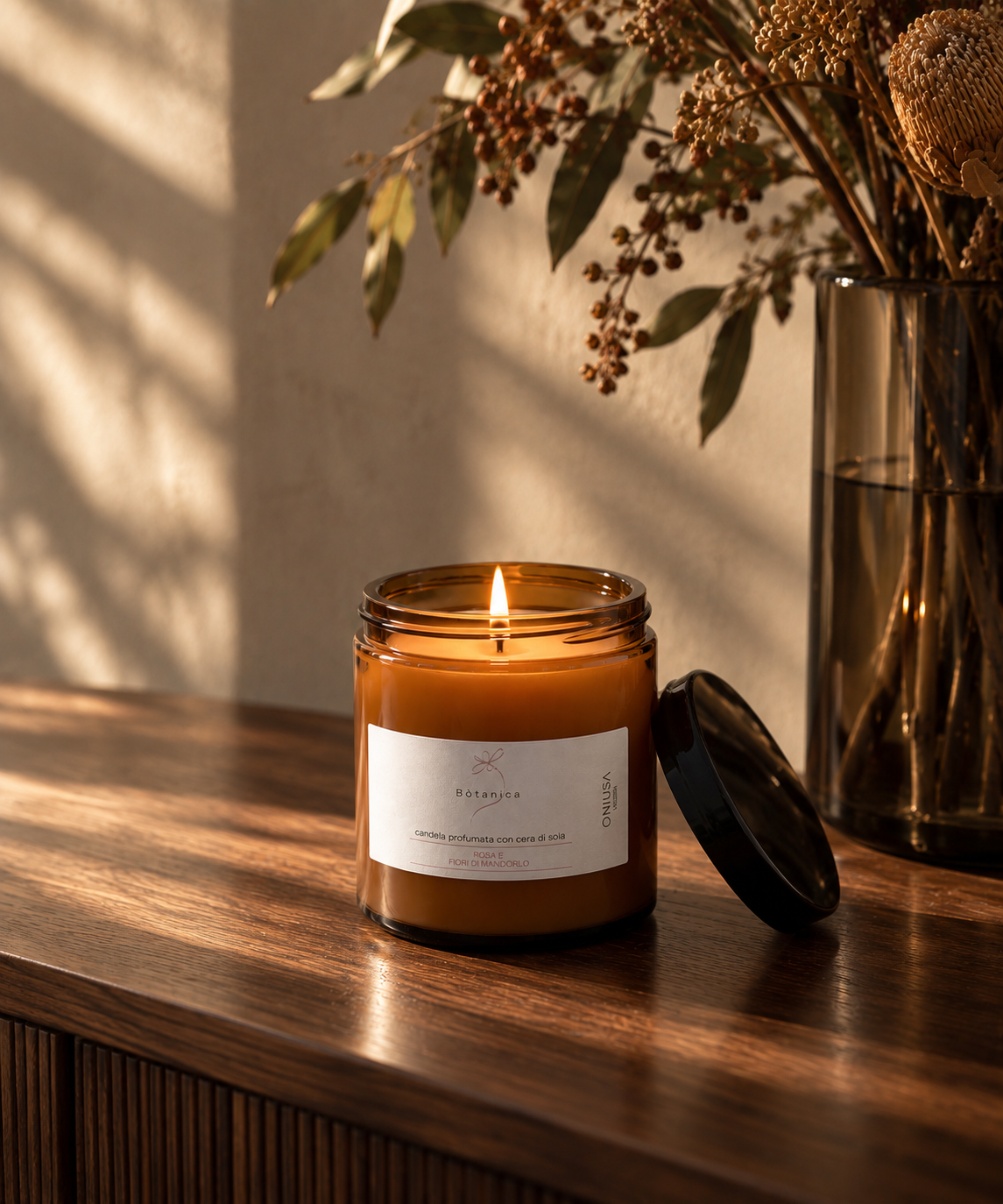








The Olfactory Pyramid in Home Fragrances
The olfactive pyramid is a fundamental concept in the world of perfumery, used to describe the structure and evolution of a fragrance over time. It is a visual representation that divides a perfume into three main parts: top notes, heart notes, and base notes. Each section of the pyramid represents a level of volatility and longevity of the fragrance, allowing one to understand how it develops from the first application to its final evanescence.
Top notes are those perceived immediately after applying the perfume. They are fresh, light, and often fruity or citrusy. These notes fade quickly, usually within 15-30 minutes. Heart notes, on the other hand, emerge after the top notes have dissipated. They form the core of the perfume, lasting from two to four hours. They are often floral or spicy. Finally, base notes are those that linger the longest, often up to eight hours or more. They are rich, deep, and usually woody or amber.
The olfactive pyramid is crucial not only for creating personal perfumes but also for room diffusers. The latter are designed to release fragrances continuously and in a controlled manner, creating specific atmospheres within a space. Understanding the olfactive pyramid allows for the selection of room diffusers that evolve over time, maintaining a pleasant and balanced sensation.
History of Room Diffusers
The use of ambient fragrances has ancient roots, dating back thousands of years. In ancient Egypt, for example, incense and aromatic oils were used not only for religious purposes but also to perfume homes and tombs. The Egyptians believed that fragrances could purify the air and bring people closer to the gods. In the Middle Ages, the use of fragrances spread throughout Europe, largely due to trade with the East. Aristocrats used bags of dried herbs and flowers to perfume clothes and rooms. With the Renaissance, perfume production became a true art form, with cities like Venice and Florence distinguishing themselves for the quality of their fragrances. In the 19th century, with the advent of modern chemistry, the production of ambient fragrances underwent a revolution. It became possible to synthesize new odorous molecules, greatly expanding the range of available fragrances. This period saw the birth of the first room diffusers, which used wooden sticks or evaporation mechanisms to slowly release fragrances into the air. Today, room diffusers are available in a variety of forms, from electric diffusers to vaporizers, and scented candles. Research continues to refine these technologies to ensure optimal diffusion of fragrances, improving air quality and people's mood.What is the Olfactive Pyramid?
The olfactive pyramid is a theoretical model that describes the structure of a perfume. This pyramid is composed of three distinct levels: top notes, heart notes, and base notes. Each of these categories has specific characteristics that contribute to the overall perception of the fragrance. Top notes are the first to be perceived when a perfume is applied. They are generally fresh, light, and volatile, quickly fading to make way for the heart notes. These initial notes are crucial for the first impression a perfume gives. Heart notes emerge after the top notes have dissipated and form the main body of the perfume. They are often softer and rounder, lasting several hours. Heart notes can include floral, spicy, or fruity aromas, contributing to the perfume's complexity. Base notes are those that linger longest on the skin, providing the foundation of the perfume. They are typically heavier and richer, such as woody, musky, or amber notes. These notes develop slowly and can last all day. Understanding the olfactive pyramid is essential for anyone working in the perfumery sector, as it allows for balancing the different components of a perfume harmoniously. For consumers, this knowledge can help choose perfumes that meet their preferences and are best suited for different occasions.Top Notes: The First Impression
Top notes are the introduction to a fragrance. These notes are the first to be perceived and play a fundamental role in forming the first impression. They are usually light, fresh, and volatile, evaporating quickly to make way for the heart notes. Top notes can include a variety of fragrances, but they are often dominated by citrus, fruity, or herbaceous scents. Lemon, bergamot, mint, and lavender are common examples. These aromas are chosen for their ability to immediately capture attention and create a positive initial impact. In the context of room diffusers, top notes are crucial for determining the initial perception of a space. When we enter a room, our sense of smell is immediately struck by the top notes of the room diffuser. This can influence our mood and our perception of the environment. For example, a lemon top note can make a room feel fresher and cleaner, while a lavender top note can create a sense of calm and relaxation.Heart Notes: The Heart of the Fragrance
Heart notes represent the core of a fragrance. Emerging after the top notes have evaporated, these notes constitute the heart of the fragrance and last longer. They are less volatile than top notes and tend to be softer and rounder. Heart notes can include a wide range of aromas, but they are often floral, spicy, or fruity. Rose, jasmine, cinnamon, and coriander are common examples. These aromas provide depth and complexity to the fragrance, developing slowly and remaining perceptible for several hours. In the case of room diffusers, heart notes are important for maintaining olfactory interest after the top notes have evaporated. These notes help create a welcoming and inviting atmosphere. For example, a diffuser with rose and cinnamon heart notes can create a warm and relaxing environment, ideal for a quiet evening at home.Base Notes: The Longevity of the Fragrance
Base notes are the final stage of a fragrance. These notes are the least volatile and can last up to 24 hours, providing the foundation upon which the entire fragrance is built. They are generally heavier and richer, such as woody, musky, or amber notes. Base notes are crucial for the longevity of a fragrance. After the top and heart notes have dissipated, the base notes remain, providing an olfactory persistence that can last throughout the day. Aromas like sandalwood, patchouli, vanilla, and amber are common in this category. For room diffusers, base notes are essential to ensure a long-lasting fragrance. A diffuser with sandalwood and vanilla base notes can keep a room scented for many hours, creating a welcoming and persistent atmosphere. These final notes leave a lasting impression, influencing the overall perception of the space.How to Choose a Room Diffuser
Choosing the right room diffuser can seem like a daunting task, but understanding the olfactive pyramid can make the process simpler. Here are some practical tips to help you choose:- Identify the purpose: Consider the environment in which you will use the diffuser. Do you want to create a relaxing atmosphere in the bedroom or an energizing environment in the office? This will influence the choice of notes.
- Understand personal preferences: Fragrances are extremely subjective. Identify which notes you like best. Do you prefer fresh citrus, delicate flowers, or warm spices?
- Consider the fragrance longevity: If you want a scent that lasts all day, opt for a diffuser with strong base notes. If you prefer something lighter and more temporary, focus on the top and heart notes.
- Try different types of diffusers: Diffusers, scented candles, sprays, and sticks are just some of the available options. Experiment to find the one that best suits your needs.
- Read reviews: The experiences of other users can provide useful insights into the quality and effectiveness of a diffuser.
The Importance of Ingredient Quality
The quality of ingredients used in a room diffuser is fundamental in determining its effectiveness and safety. High-quality ingredients not only produce a more pleasant fragrance but are also less likely to cause irritation or allergic reactions. Room diffusers can contain a wide range of ingredients, including natural essential oils and synthetic compounds. Essential oils are extracted from plants and flowers and offer aromatherapy benefits, helping to improve well-being and mood. However, it is important to ensure that the oils used are pure and not diluted with low-quality chemicals. Synthetic compounds, on the other hand, can replicate a wide range of fragrances and are often more stable and less expensive than essential oils. However, the quality of these compounds can vary significantly. Choosing products made with high-quality synthetic compounds can make the difference between a pleasant diffuser and one that feels artificial or irritating.Natural vs. Synthetic Fragrances
The comparison between natural and synthetic fragrances is a topic of great interest in the world of perfumery and room diffusers. Both types of fragrances have distinct advantages and disadvantages, and the choice between the two often depends on personal preferences, health and safety considerations, and specific use objectives. Here is a detailed analysis of the characteristics, benefits, and limitations of each.Natural Fragrances
Origin and Composition
Natural fragrances are primarily composed of essential oils extracted from plants, flowers, fruits, and other botanical sources. These oils are obtained through various extraction methods such as steam distillation, cold pressing, and natural solvent extraction. Essential oils are known for their purity and therapeutic benefits, often used in aromatherapy to promote physical and mental well-being.Benefits of Natural Fragrances
- Olfactory Complexity: Natural essential oils possess complex aromatic profiles that are difficult to replicate with synthetic compounds. Each drop of essential oil contains a unique mixture of natural chemical compounds that contribute to its distinctive fragrance.
- Health Benefits: Many essential oils have therapeutic properties. For example, lavender is known for its relaxing properties, while eucalyptus can help clear respiratory passages. Using room diffusers with essential oils can help improve mood and air quality.
- Sustainability: Natural fragrances, when sustainably produced, can have a lower environmental impact compared to their synthetic counterparts. The cultivation and extraction of essential oils can support sustainable agricultural practices and biodiversity conservation.
Limitations of Natural Fragrances
- Cost: Natural essential oils can be expensive to produce, which is often reflected in the price of room diffusers that contain them. Production requires large quantities of plant raw materials, which can make the process costly and resource-intensive.
- Stability and Longevity: Natural fragrances tend to be less stable and long-lasting than synthetic compounds. They can evaporate more quickly and lose their intensity over time, requiring more frequent applications.
Synthetic Fragrances
Origin and Composition
Synthetic fragrances are created in laboratories using chemical compounds that replicate natural fragrances or create new fragrances that do not exist in nature. These compounds can be designed to have greater stability and longer duration than natural essential oils.Benefits of Synthetic Fragrances
- Cost and Accessibility: Synthetic compounds are generally less expensive to produce than natural essential oils. This makes room diffusers more accessible to a wide range of consumers.
- Stability and Longevity: Synthetic fragrances are designed to be stable and long-lasting. They maintain their olfactory intensity for extended periods, reducing the need for frequent applications.
- Variety of Fragrances: Synthetic fragrances offer an almost unlimited range of scents. They can be created to exactly replicate natural fragrances or to develop new combinations that would not be possible with natural ingredients.
Limitations of Synthetic Fragrances
- Perception of Artificiality: Some consumers perceive synthetic fragrances as less authentic or pleasant than natural ones. They may lack the olfactory complexity and depth of essential oils.
- Potential Health Effects: Some chemical compounds used in synthetic fragrances can cause allergic reactions or sensitivities in some people. It is important to choose high-quality products and always test before use.
- Environmental Impact: The production of synthetic fragrances can involve the use of potentially harmful chemicals and industrial processes that can have a negative impact on the environment.
Conclusions
The article explored in detail the fascinating world of home fragrances, with a particular focus on the olfactory pyramid and the distinction between natural and synthetic scents. Understanding the olfactory pyramid is essential for anyone wishing to choose the right fragrance for their environment, as it provides guidance on how a scent evolves over time through top, heart, and base notes. We analyzed the history of home fragrances, from ancient Egyptian practices to modern diffusion technologies, showing how space fragrancing has always played an important role in human life. With the evolution of production methods and extraction techniques, today we can enjoy a wide range of options, from traditional essential oils to sophisticated synthetic molecules. The comparison between natural and synthetic fragrances highlighted their respective advantages and disadvantages. While natural fragrances offer olfactory complexity and therapeutic benefits, synthetic ones ensure stability and a vast choice of scents. The quality of ingredients is a crucial factor to consider, as it affects not only the pleasantness of the fragrance but also health and safety. Choosing the right home fragrance requires attention and awareness of one's olfactory preferences and the specific needs of the environment. Whether it's about creating a relaxing atmosphere at home or maintaining a stimulating work environment, there is a perfect home fragrance for every situation. Finally, the importance of ingredient quality cannot be underestimated. Opting for high-quality fragrances, both natural and synthetic, ensures not only a richer olfactory experience but also greater health safety and reduced environmental impact. In conclusion, knowledge and understanding of the olfactory pyramid and the differences between natural and synthetic fragrances allow for more informed and conscious choices. A well-chosen home fragrance can transform a space, creating a welcoming and pleasant atmosphere that reflects your personality and meets your specific needs. Home fragrancing is an art and a science, and with the right information, anyone can become a master at creating the perfect environment through fragrances. Discover our selection of home fragrances on Oniusa Venezia and transform your space with unique and high-quality fragrances. Take advantage of our offers and create the perfect atmosphere for every occasion. Discover our home fragrances!
Share
Read more

How an air freshener is made
Home fragrances have become a fundamental component of our daily well-being, both at home and at work. These products, also known as room diffusers, have the power to transform any space, making it...

Well-being and luxury: 2024 trends in home fragrance
The home fragrance sector continues to grow and evolve, driven by a mix of innovation, refined design, and a growing focus on sustainability. In a world where quality of life and personal well-bein...


